

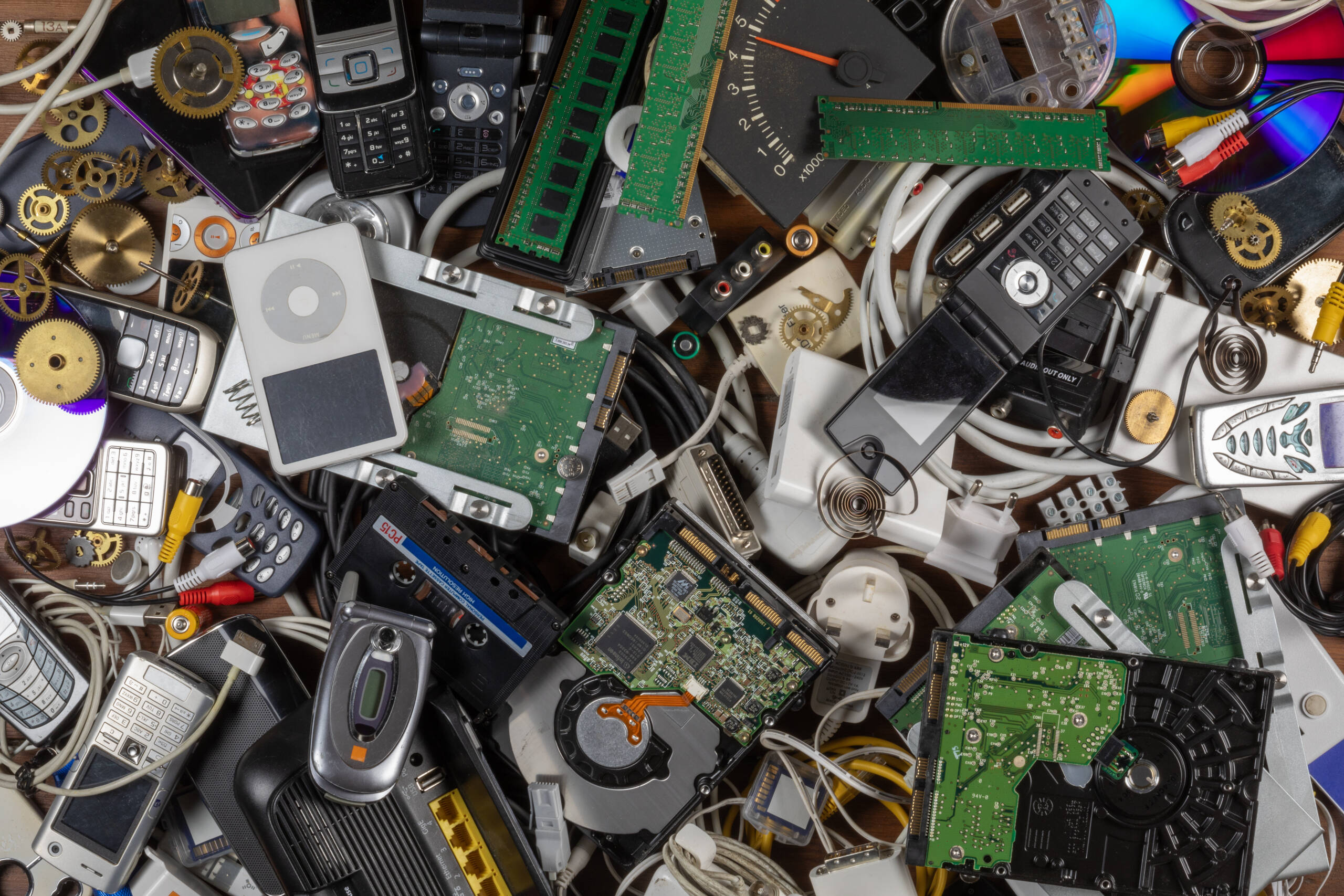
If you’ve ever looked at a broken keyboard, a box of old cables or a retired laptop and wondered what you’re actually meant to do with it, you’re not alone.
Electronic waste is one of the most misunderstood waste streams in UK businesses, largely because it doesn’t behave like normal rubbish.
WEEE is the set of regulations that govern how electrical and electronic waste must be handled once it reaches the end of its life. It sounds technical, but the idea behind it is straightforward.
Once you understand what counts as WEEE and why it matters, managing it becomes much simpler.
What Does WEEE Stand For?
WEEE stands for Waste Electrical and Electronic Equipment. In practical terms, it covers almost anything that needs a plug, a battery or a cable to work, once it reaches the end of its useful life.
If an item is powered by electricity, even indirectly, it’s likely to fall under WEEE regulations when you dispose of it.
That includes obvious items like computers and printers, but also a long list of smaller, easily overlooked equipment that builds up quietly in offices and workplaces.
What Counts as WEEE in a Typical Business?
Most businesses generate more WEEE than they realise.
Common examples include keyboards, mice, headsets and webcams, phone chargers and power leads, mobile phones and tablets, routers, monitors, screens and docking stations, desk fans, lamps and small electrical appliances.
Batteries and vapes sit outside standard WEEE categories, but they are still classed as specialist waste and should never be placed in general waste or mixed recycling. They are covered by separate regulations and require their own dedicated disposal routes.
The key point is this: if it once needed power to function, it does not belong in your general waste bin.
Why Can’t WEEE Go in General Waste?
Electronic equipment contains a mix of valuable materials and hazardous components. Metals such as copper, aluminium and rare earth elements can be recovered and reused.
At the same time, items like batteries and circuit boards can leak harmful substances if crushed or sent to landfill.
Disposing of WEEE incorrectly increases environmental harm and creates safety risks during waste handling. That’s why UK law requires electrical waste to be collected, treated and recycled separately from general waste.
The Environment Agency makes this distinction clear, and failure to comply can result in enforcement action, particularly where businesses are seen to be routinely disposing of electrical items incorrectly.
How WEEE Regulations Apply to UK Businesses
WEEE regulations apply to all businesses, regardless of size. If your organisation discards electrical or electronic equipment, you have a duty of care to ensure it is handled by an authorised waste carrier and treated at an approved facility.
This applies whether you’re a ten-person office, a retail site, a warehouse or a multi-location organisation. The rules don’t require businesses to become recycling experts, but they do require you to take reasonable steps to prevent electrical waste from entering landfill.
As recycling rules tighten under the Government’s Simpler Recycling reforms, scrutiny around waste separation is increasing. While WEEE sits alongside, rather than inside, Simpler Recycling, the direction of travel is clear: specialist waste streams are expected to be managed properly, not ignored.
The Common WEEE Problem Most Businesses Face
In theory, WEEE regulations are clear. In practice, most businesses struggle with one thing: what actually happens day to day.
Small electrical items break unexpectedly. Cables are replaced. Old equipment gets upgraded. Without a clear system, these items end up in drawers, cupboards or, eventually, the general waste bin.
It’s rarely deliberate. It’s usually the result of uncertainty. People don’t know where the item should go, so they default to the easiest option.
That’s why WEEE compliance is less about policy documents and more about infrastructure.
Making WEEE Easy Rather Than Perfect
The simplest way to manage WEEE is to remove decision-making from the process. When there is a clearly labelled, visible place for electronic waste, people use it.
A dedicated WEEE bin placed alongside existing recycling bins solves the problem quietly, without asking people to change how they work or remember new rules. Staff don’t need training sessions or reminders. They just need a clear option.
From a business perspective, this also creates consistency. Electrical waste is stored safely, collections happen in a controlled way, and records are generated automatically. That matters not just for compliance, but for internal housekeeping and external audits.
Where SimplerWEEE Fits In
Most businesses don’t struggle with the idea of WEEE. They struggle with the effort.
One-off collections, unclear pricing, paperwork chasing and uncertainty about what happens next all add friction. That’s usually why electronic waste ends up sitting around or going in the wrong bin.
SimplerWEEE exists to remove that friction.
Instead of treating WEEE as an occasional problem to solve later, it turns it into part of the normal waste routine. Dedicated WEEE bins give staff a clear place to put small electrical items the moment they’re finished with. When the bin is ready, a simple scan triggers collection. Everything is handled by licensed partners, and digital records are generated automatically.
The benefit isn’t just compliance. It’s tidiness, predictability and fewer decisions. Offices stop accumulating boxes of old cables. Facilities teams stop worrying about whether something has been disposed of correctly. And businesses gain a clear audit trail without having to actively manage one.
It’s a practical solution for a very ordinary problem, which is exactly why it works.
WEEE as Part of a Smarter Waste System
Understanding WEEE isn’t about memorising regulations. It’s about recognising that electronic waste behaves differently to paper, packaging or food waste.
When businesses treat WEEE as a normal part of their waste setup, rather than an occasional inconvenience, compliance becomes routine. Spaces stay tidier. Risk drops. And decisions around upgrades or replacements become easier because disposal is already solved.
In simple terms, WEEE is just waste that needs a slightly smarter system.
Once that system is in place, WEEE stops being something you worry about at all.